Best Beaches in Costa Teguise, Lanzarote: A Local Guide for 2026
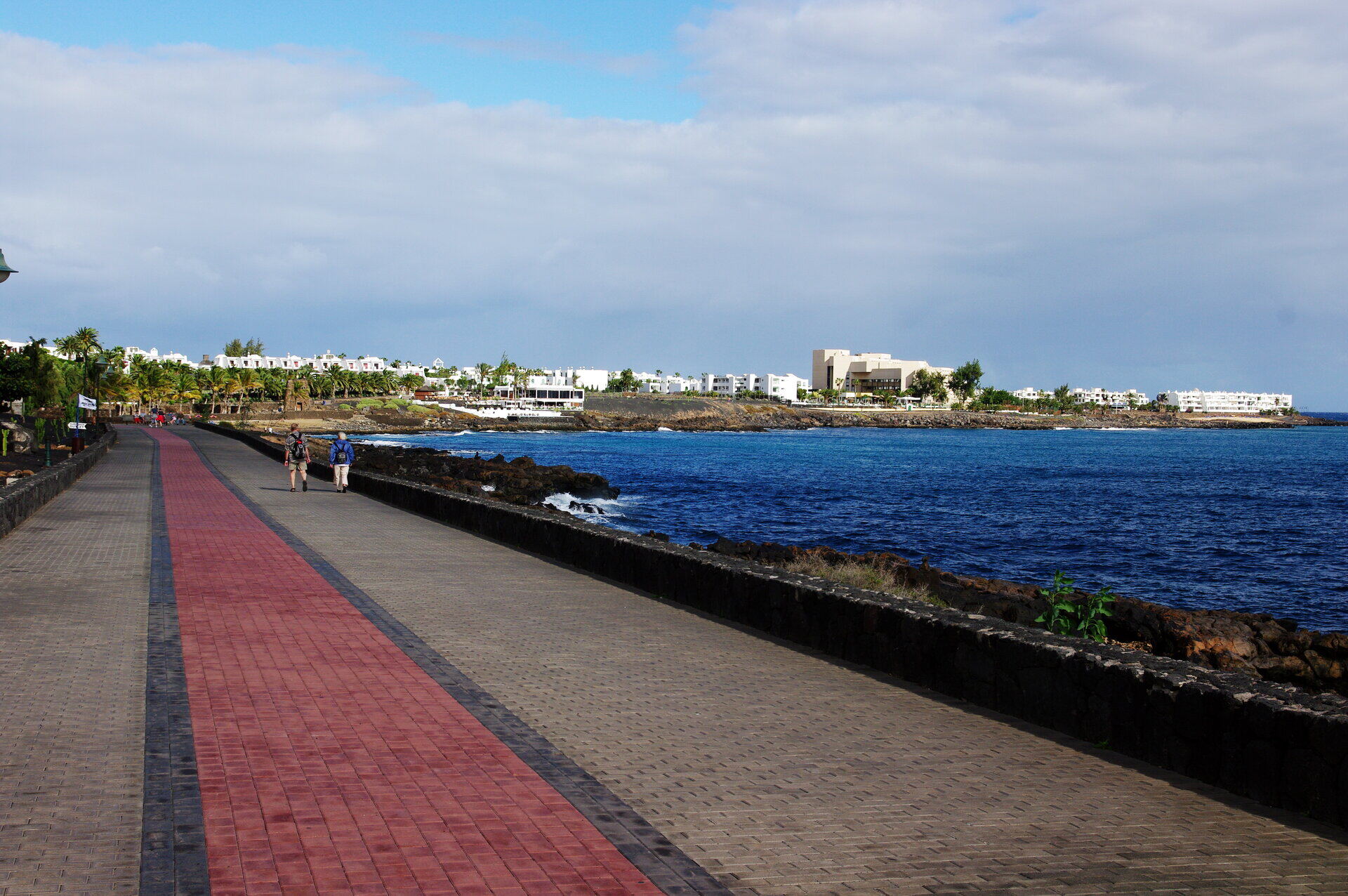
Costa Teguise has five beaches along about three kilometres of east-facing coast. They are not the white sand and turquoise water of stock photos. Sand runs from golden to dark, the coastline is volcanic, and the wind comes up most afternoons. That is the appeal. You swim next to black lava rock, not a manicured resort lagoon. The five beaches divide cleanly: a family lagoon, a windsurf beach, a quiet cove, a surf spot, and a small inlet most visitors walk past.
We give this list to guests at Casa Los Alisios on day one. Facilities, wind, the Blue Flag question that keeps coming up on travel forums — covered below. Pick the right beach for the conditions and your morning is sorted.
How the five beaches compare
| Beach | Sand | Best for | From villa | Sunbeds | Lifeguard | Restaurants |
|---|---|---|---|---|---|---|
| Playa El Ancla | Mixed cove | Quiet swim, sunrise | 10 min walk | No | No | No |
| Playa del Jablillo | White, sheltered | Families, snorkelling | 20 min walk | Yes | No | Kiosk only |
| Playa de Las Cucharas | Golden, wide | Windsurfing, lessons | 40 min walk | Yes | Summer | Many |
| Playa de los Charcos | White, exposed | Bodyboard, locals | Next to Las Cucharas | No | No | Walk to Las Cucharas |
| Playa Bastián | White + black picón | Quick dip, anti-crowd | South end of resort | No | No | Apartment bars nearby |
Which beach for today
- Windy day with kids: Jablillo. The breakwaters block almost all the chop.
- Windsurfing or kitesurfing: Las Cucharas. No contest.
- Quiet morning swim before breakfast: El Ancla. Three or four people at most.
- Bodyboard or a bit of shorebreak on windy days: Los Charcos.
- Five-minute dip near the southern end of the resort: Bastián. Most tourists walk past it.
- A long coastal walk with multiple swim stops: Start at El Ancla, work south along the promenade through Jablillo, Las Cucharas and Los Charcos to Bastián.
Playa El Ancla: closest to the villa
Distance from Casa Los Alisios: 10 min walk Sand: Mixed, golden with darker volcanic patches Swim conditions: Calm and sheltered most days; rocky entry, reef shoes recommended Facilities: None. No sunbeds, no kiosk, no toilets, no lifeguard. Parking: Street parking along Avenida del Mar, two minutes from the sand Best for: Sunrise swim, recovery dip after a run, snorkelling along the rocks Avoid if: You want food, shade or facilities. Head to Las Cucharas instead.
The closest beach to the villa and the easiest morning routine. Cross Avenida de las Palmeras, leave the Hotel Barceló on your left, follow the dirt path down with a short left turn near Avenida del Mar and you are at the cove in about ten minutes. Two main roads to cross, the rest is a quiet track with an open view of the coast.
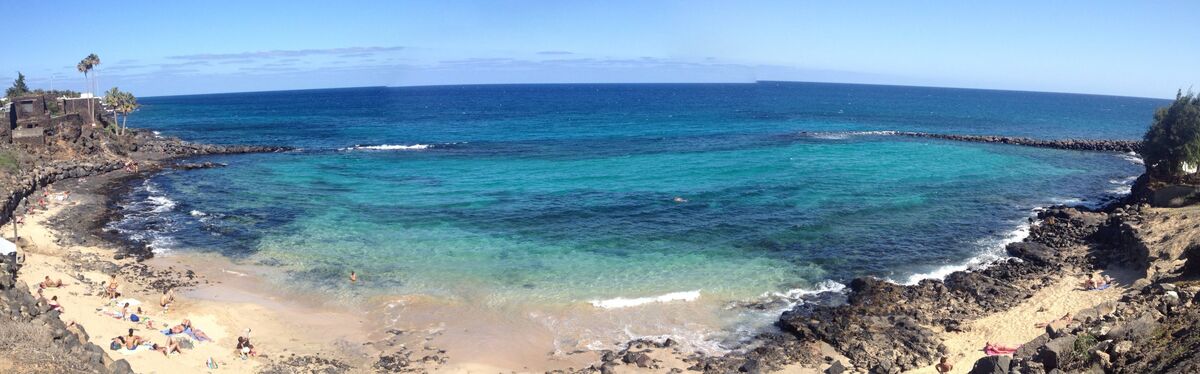
El Ancla is small and sheltered. Even when the trade winds are hammering Las Cucharas in the afternoon, this cove stays glassy because the surrounding rocks block the swell. The water is clear in every month of the calendar. Snorkelling along the rocky edges is surprisingly good for a beach with no infrastructure: parrotfish, damselfish and the occasional octopus. The catch is the entry. You climb in over rocks, so neoprene reef shoes (about 10 EUR at any beach shop) save your feet.
There is nothing here. No sunbeds, no beach bar, no toilet, no lifeguard. Bring water, bring snacks, bring everything. If you are recovering from a race or a long ride, El Ancla is where Casa Los Alisios guests come for an easy swim. The water is shallow, the entry is short, and you can be back at the villa in fifteen minutes.
📍 See visitor photos of Playa El Ancla on Instagram
Playa del Jablillo: the family lagoon
Distance from Casa Los Alisios: 20 min walk along the promenade Sand: White, sheltered behind a pair of breakwaters Swim conditions: Calm as a lagoon even on windy days; shallow at the centre Facilities: Sunbed and umbrella rental, drinks and ice cream kiosk Parking: Streets above the beach; tighter in school holidays Best for: Families with toddlers, snorkelling, scuba baptism dives Avoid if: You want a long stretch of open sand. Jablillo is compact.
This is the family answer. Two breakwaters turn the bay into a shallow lagoon that stays calm when everywhere else has chop. Small children can wade in water that barely reaches their waist. At low tide the rock pools fill with small fish, crabs and sea anemones, which keeps kids entertained for hours.
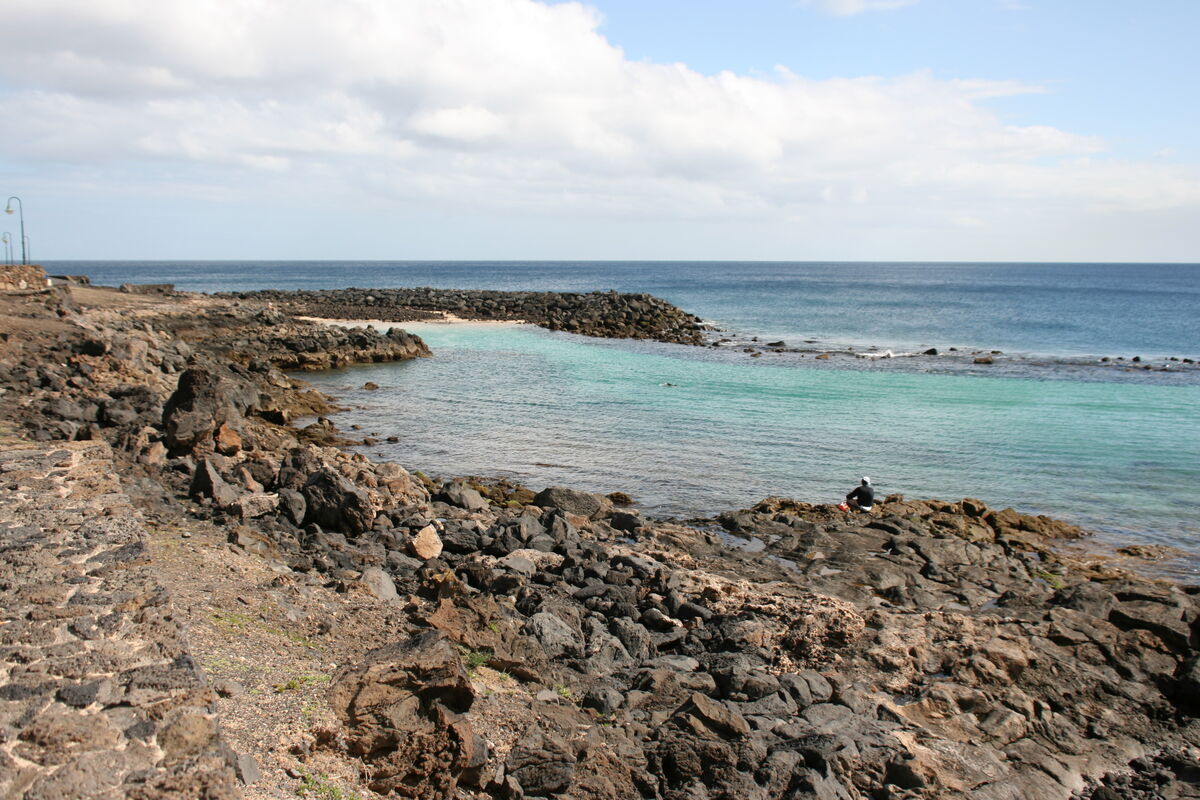
The snorkelling at Jablillo is the best in Costa Teguise. Follow the inside edge of the reef and you see parrotfish, damselfish, wrasses and the occasional octopus. Several local dive schools use Jablillo for first-time baptism dives because the visibility is good and there is no current inside the lagoon. For a deeper look at what is on offer, our scuba diving in Costa Teguise guide lists the operators we send guests to.
Facilities here are simple. A small kiosk sells drinks, ice creams and sandwiches. Sunbed and umbrella rental costs roughly the same as Las Cucharas. The surrounding rocks throw enough shade that you do not need to fight for a spot under a parasol. No formal lifeguard, but the lagoon is shallow enough that supervision is straightforward.
Jablillo sits roughly halfway between El Ancla and Las Cucharas along the promenade. Twenty minutes on foot from the villa, five minutes if you drive and park on the streets above the beach.
📍 See visitor photos of Playa del Jablillo on Instagram
Playa de Las Cucharas: windsurf capital of the east coast
Distance from Casa Los Alisios: 40 min walk along the promenade, or a short drive Sand: Golden, the only Costa Teguise beach with “toasted” sand Swim conditions: Choppy in the afternoon, calm before 11:00 Facilities: Sunbeds, umbrellas, showers, toilets at adjacent restaurants, lifeguard in high season Parking: Free street parking next to the beach; arrive before 10:00 in summer Best for: Windsurfing, kitesurfing, lessons, lunch on the promenade Avoid if: You want shelter from wind. Head to Jablillo or El Ancla.
The biggest and the best-known beach in Costa Teguise. Las Cucharas faces east into the open Atlantic and catches the northeast trade winds with a directness that earned it a place on the PWA windsurfing World Tour calendar in past seasons, and the beach is still a regular fixture on European freestyle circuits. If you are taking your first windsurf lesson or your fiftieth, the conditions are reliable from late April through October.
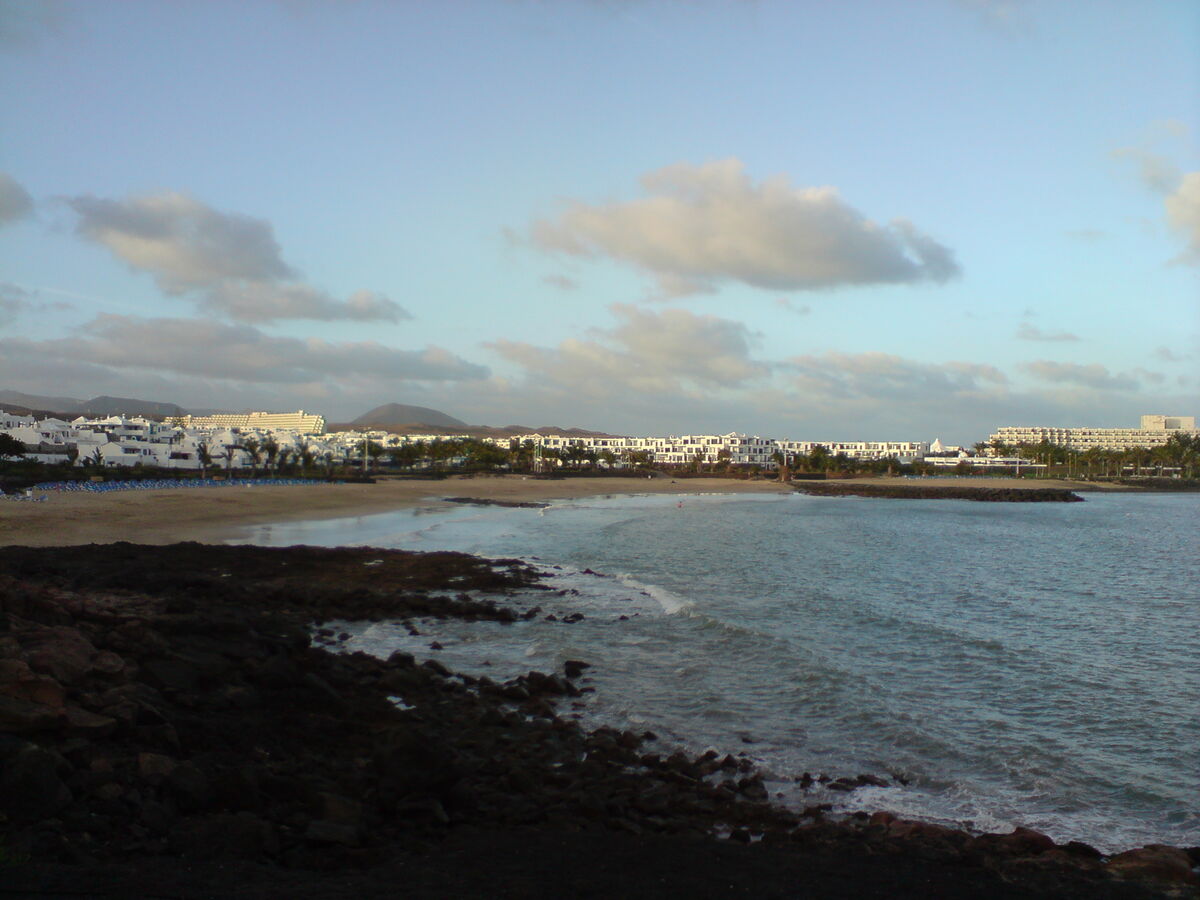
Mornings are for swimming and sunbathing. The wind usually picks up between 11:00 and 13:00, and by then the windsurfers and kitesurfers take over. The beach faces east, so you get sun on the sand from sunrise until early afternoon. Sunbed and umbrella rental is available from beach attendants. Showers are along the seafront wall. There is a lifeguard post staffed during the summer season.
Behind the beach, the Las Cucharas promenade has the densest concentration of restaurants and cafés in Costa Teguise. Spanish tapas, Italian, British pub food and a couple of Indian places. Quality is mixed, so ask at the villa for current favourites. Windsurf and kitesurf rental and lessons are offered by several operators along the strip, and our windsurfing in Costa Teguise guide goes into who runs which level of lesson.
From Casa Los Alisios you can either walk the coastal promenade (40 minutes, easy and pram-friendly) or drive (seven minutes). The parking next to the beach is free but fills up by 10:00 in summer. Triathletes use Las Cucharas for open water training and the Ironman Lanzarote 2026 race week brings hundreds of swim sessions through here in the build-up.
📍 See visitor photos of Playa de Las Cucharas on Instagram
Playa de los Charcos: where the locals go
Distance from Casa Los Alisios: Just south of Las Cucharas along the promenade Sand: White and finer than Las Cucharas, but more exposed Swim conditions: More wave than Las Cucharas; suits stronger swimmers Facilities: None. No sunbeds, no kiosk, no lifeguard Parking: Streets above the beach Best for: Bodyboarders, locals, anyone wanting fewer tourists Avoid if: You are with small children or want any infrastructure
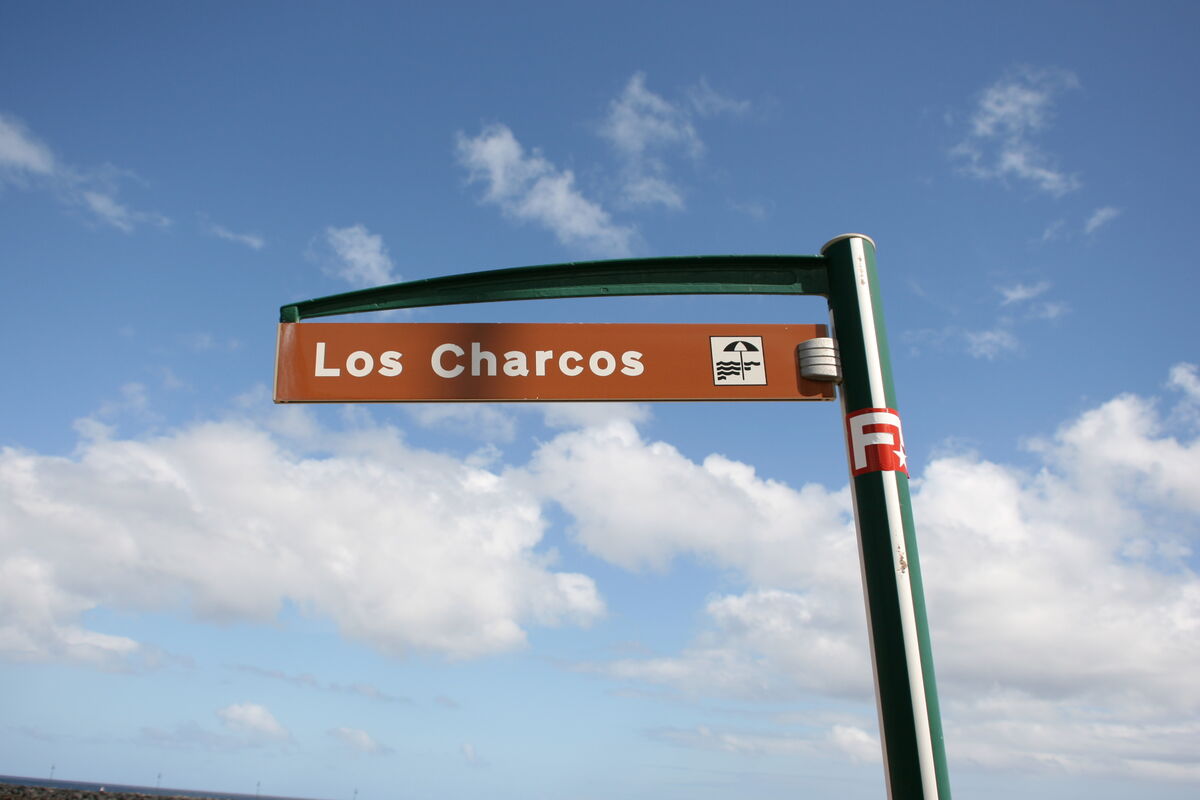
Los Charcos sits immediately south of Las Cucharas. The promenade runs along it but the beach itself has no facilities and gets noticeably less foot traffic. The catch is more wave action and more wind than the sheltered bays north, so bodyboarders favour it. This is not a surf beach: Costa Teguise sits sheltered from the Atlantic swell, and for actual waves you drive to Famara. The sand is white and finer than Las Cucharas. Locals who want to swim without paying for a sunbed come here.
If the wind is from the north (a northerly swell or a Calima shift), Los Charcos can actually be calmer than Las Cucharas because the orientation shifts the wind angle. Worth checking before you commit to a beach for the day.
📍 See visitor photos of Playa de los Charcos on Instagram
Playa Bastián: the one most tourists miss
Distance from Casa Los Alisios: Southern end of the resort, accessible on foot or a short drive Sand: White sand mixed with volcanic picón (small black pebbles) Swim conditions: Calm — the inlet provides natural shelter Facilities: Nothing on the beach; bars at the adjacent hotels Parking: Hotel street parking Best for: Long-term residents, a quiet five-minute dip Avoid if: You want a destination beach with sunbeds and a kiosk
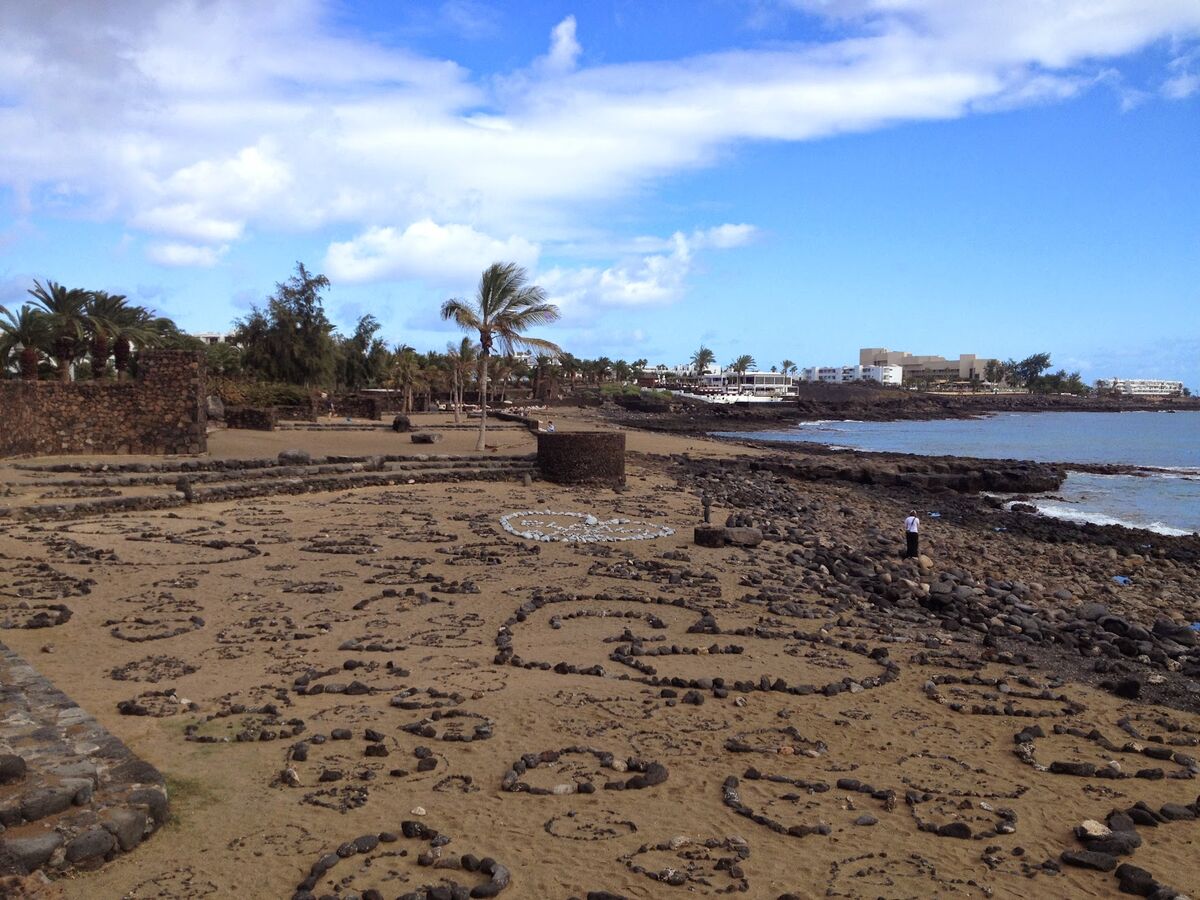
Bastián is the smallest of the five, roughly thirty metres of sand inside a rocky inlet at the southern end of Costa Teguise, ringed by the Playa Bastián apartment complexes. The inlet shelters it from waves and the water is usually calm. The beach itself is tiny and there is no infrastructure on the sand, but the surrounding rocks make a natural sun trap and the inlet is good for a quick swim if you are nearby.
Some long-term residents use Bastián as their daily spot precisely because tourists overlook it. If your villa or hotel is in the southern half of Costa Teguise, Bastián is closer than Las Cucharas and never crowded.
📍 See visitor photos of Playa Bastián on Instagram
Water temperature in Costa Teguise, month by month
The Atlantic here is swimmable in every month if you tolerate a cool dip in February. The Canary Current keeps water temperatures stable compared with the Mediterranean. The swing between coldest and warmest is only about 4°C.
| Month | Sea (°C) | Air high (°C) | Swim verdict |
|---|---|---|---|
| January | 19 | 19 | Brisk, swimmable |
| February | 18 | 20 | Coldest of the year |
| March | 18 | 21 | Still cold but warming |
| April | 18 | 22 | Comfortable in the sun |
| May | 19 | 23 | Easy swim |
| June | 20 | 24 | Warm, trade winds picking up |
| July | 21 | 26 | Warm and windy |
| August | 22 | 28 | Warmest of the year |
| September | 22 | 27 | Warm and slightly calmer |
| October | 22 | 25 | The best month overall |
| November | 21 | 23 | Easy swim, quiet season |
| December | 20 | 20 | Comfortable in a wetsuit |
Most guests are surprised that October is the best swimming month. The water has had all summer to warm up, the trade winds are easing, and the tourist crowd has thinned. On water temperature alone, September and October beat June and July. For a full breakdown of when to visit, see our best time to visit Costa Teguise post.
The Blue Flag question
Travel articles often claim that Las Cucharas or Jablillo holds a Blue Flag. That has not been true for several years.
For the 2026 season, none of the Costa Teguise beaches hold a Bandera Azul. The only Blue Flag beaches on Lanzarote this year are El Reducto in Arrecife and Playa Blanca in Yaiza. Jablillo briefly held one in the past, then lost it. Las Cucharas and Bastián have not held one in recent memory either. The local town hall has been criticised publicly by opposition parties for the absence.
What does this mean in practice? Less than you might think. Blue Flag is partly about water quality (Costa Teguise water is regularly tested and clean), partly about safety infrastructure (Las Cucharas does have a summer lifeguard), and partly about administrative box-ticking. The absence of the flag is not a warning sign that the water is dirty. It is a sign that the municipality has not completed the certification paperwork. Plenty of excellent beaches in Spain do not bother.
Beach safety in Costa Teguise
- Trade winds and afternoon chop. From May to September, expect the wind to pick up between 11:00 and 13:00 and stay until evening. Las Cucharas, Los Charcos and Bastián get noticeably choppy. Jablillo and El Ancla stay calm. If you are a weak swimmer, plan your swim before lunch.
- Lifeguard coverage is limited. Las Cucharas has a lifeguard post in summer. The other four beaches do not. Swim within sight of other people, and do not rely on a lifeguard being available outside high season.
- Volcanic rocks cut feet. Every Costa Teguise beach has lava rock somewhere. El Ancla and Jablillo have the most rocky entries. Reef shoes solve this completely and cost about ten euros at any beach shop in town.
There are no significant rip currents inside the main bay areas. Underwater visibility is generally good across the seasons, and water quality is regularly tested by the Cabildo de Lanzarote.
What to bring (and what to skip)
Bring:
- Reef shoes or water sandals. Non-negotiable for El Ancla and Jablillo. About 10 EUR at any local beach shop.
- Factor 50 sunscreen. UV stays high in every month, even on overcast days. Reapply every two hours.
- A light windbreaker or sarong. After a swim, the wind cools you down fast.
- Snorkel and mask. The reefs at Jablillo and El Ancla reward you for bringing your own gear.
- Water and snacks. El Ancla, Los Charcos and Bastián have zero facilities. Spar Costa Teguise is three minutes from the villa.
- A beach tent or pop-up shade if you have small children. Jablillo has some natural shade from the rocks; everywhere else is exposed.
Skip:
- Inflatable lilos or rafts. The afternoon wind pushes you out fast. Local lifeguards remove them from the sand at Las Cucharas.
- Big beach umbrellas you bring yourself. The trade winds rip them out of the sand by midday. Rent on the beach if you need shade.
- Glass bottles. Most beaches now prohibit glass.
Beaches by month: when to come for what
- January to March: Quiet, water 18-19°C, mostly empty. Bodyboarders like the extra swell. Wetsuits in March if you swim long.
- April to May: Tourist crowds light, water warming to 19-20°C. Best months for couples wanting space.
- June to July: Peak windsurfing season. Las Cucharas reliably windy by lunch. Warmest air.
- August: Warmest water (22°C+) but busiest beaches and parking. Spanish school holidays.
- September to October: The sweet spot. 22°C water, thinning crowds, October is consistently the best all-round month.
- November to December: Quiet, water cools to 20-21°C, lowest prices on flights and accommodation.
If you are planning a longer stay and want to mix beach time with sport, see our guides to open water swimming in Lanzarote, scuba diving in Costa Teguise and windsurfing on Las Cucharas.
Plan your stay
Costa Teguise’s five beaches sit on a paved coastal promenade that runs the length of the resort. Casa Los Alisios is 10 minutes’ walk from El Ancla and 40 minutes from Las Cucharas, with everything else in between. If you want a base where the beach is part of the morning routine and not a half-hour drive, this is the right resort. Check availability and rates on the homepage, or browse our Costa Teguise itinerary guides for ideas on how to build a week.
Frequently Asked Questions
- Which is the best beach in Costa Teguise for families?
- Playa del Jablillo. A pair of breakwaters turns the bay into a shallow, sheltered lagoon that stays calm even when the trade winds are blowing at Las Cucharas. Toddlers can wade safely, and rock pools at low tide are full of small fish and crabs.
- Can you walk to the beach from Costa Teguise?
- Yes. Every beach in Costa Teguise is on the coastal promenade. From Casa Los Alisios, Playa El Ancla is 10 minutes on foot, Jablillo is 20 minutes, and Las Cucharas is the furthest at about 40 minutes. The promenade is paved and pram-friendly.
- Is Costa Teguise good for windsurfing?
- Costa Teguise has one of the most reliable windsurfing beaches in Europe. Playa de Las Cucharas faces east into the Atlantic and catches the northeast trade winds from late spring to early autumn. PWA World Tour freestyle events have run here.
- How many beaches does Costa Teguise have?
- Five: Playa El Ancla, Playa del Jablillo, Playa de Las Cucharas, Playa de los Charcos and Playa Bastián. They sit on roughly three kilometres of east-facing coast and are all connected by the same coastal promenade.
- Do Costa Teguise beaches have Blue Flag status?
- No. As of 2026, none of the Costa Teguise beaches hold a Bandera Azul. The only two Blue Flag beaches on Lanzarote this season are El Reducto in Arrecife and Playa Blanca. Jablillo briefly held one in the past but has since lost the certification.
- What is the water temperature in Costa Teguise?
- Water temperatures range from about 18°C in February and March (the coldest months) up to 22°C from August to October (the warmest). The annual average sits around 20-21°C. The Atlantic here is swimmable in every month if you tolerate a cooler dip in winter.
- When is the calmest time to visit Costa Teguise beaches?
- Mornings, before 11:00. The trade winds typically pick up around midday and blow until sunset, especially between May and September. October to March is calmer overall. El Ancla and Jablillo are the most sheltered when the wind does pick up.
- Are there lifeguards on Costa Teguise beaches?
- Las Cucharas has a lifeguard post during high season (typically late spring to early autumn). Jablillo and El Ancla do not have permanent lifeguard coverage. There is no lifeguard at Los Charcos or Bastián. Always swim within sight of other people if you are alone.
Planning your trip? Book Casa Los Alisios