Costa Teguise for Digital Nomads
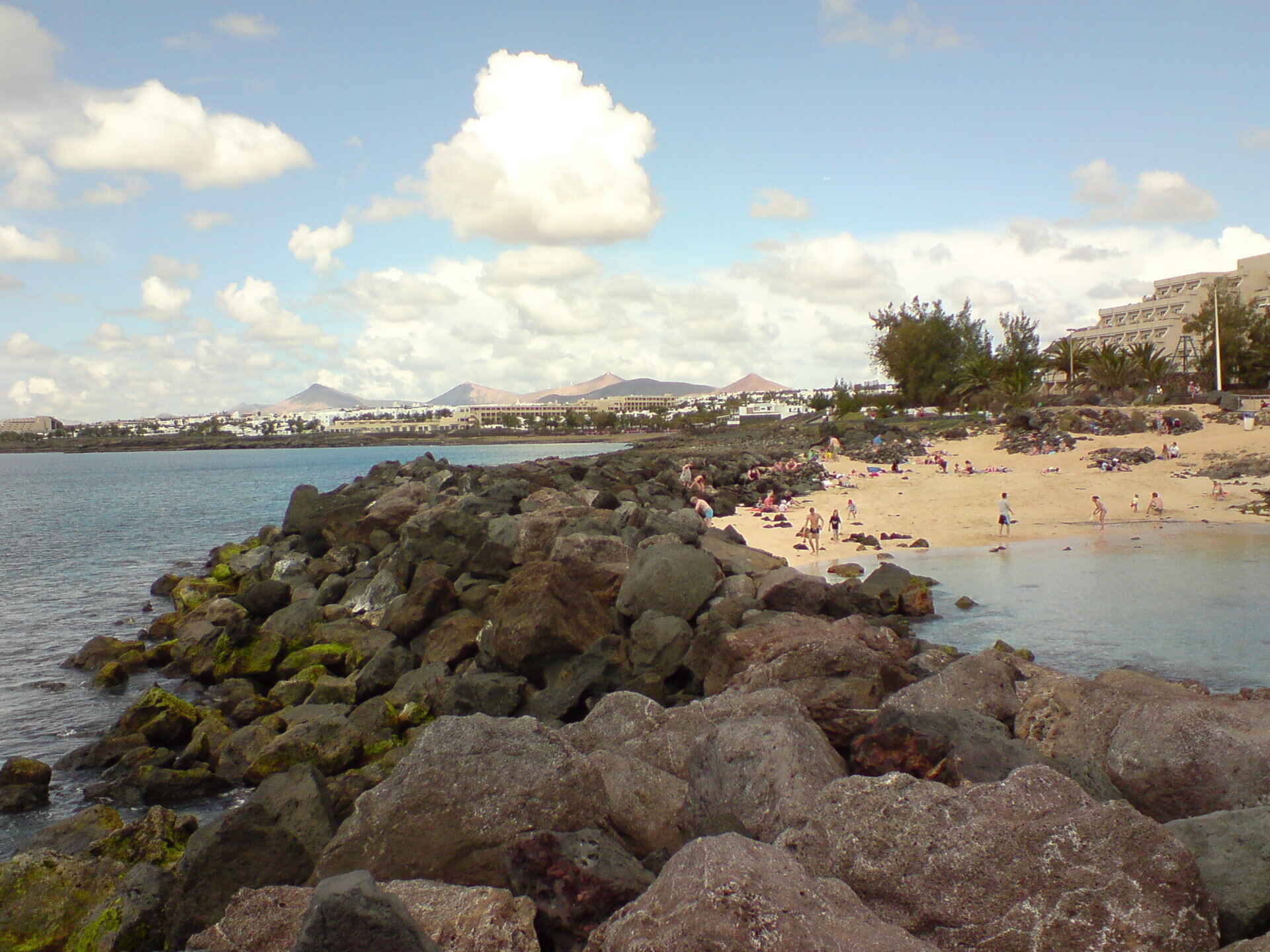
Costa Teguise is the quiet older sibling to Lanzarote’s busier resort towns. It is 15 minutes from the airport and built around a seafront promenade that wraps past several beaches without ever feeling crowded. For remote workers that combination turns out to be almost perfect: fast fiber, reliable weather, no long commute to anything, and enough infrastructure to live your normal life without constantly solving problems.
This guide is written from the host side. We run Casa Los Alisios, a 3-bedroom villa 3 minutes from the Spar supermarket and 10 minutes from Playa El Ancla, and we host a lot of digital nomads. Here is what actually matters when you decide whether Costa Teguise is the right base for you. The broader island-wide view — visa, costs, neighbourhood comparison, coworking spots — is in our complete Workation Lanzarote guide.
What Makes Costa Teguise Work for Remote Workers?
Three things, in order of how much they matter day to day.
Logistics are short. Everything you need during a working week is within a 10 minute radius. Spar is 3 minutes walk from our villa, Lidl is 10 minutes, and the closest beach, Playa El Ancla, is also about 10 minutes on foot. The airport is 15 minutes by car, which makes fly-in fly-out travel for client meetings or quick trips to mainland Europe genuinely painless.
Weather is boring in the best way. Costa Teguise has a hot desert climate with average temperatures between 19°C and 24°C every month of the year. August peaks at around 28°C, January sits at 19°C. Annual rainfall is roughly 122mm, most of it between November and February, and even then it is usually brief. You do not plan your week around the weather, which is a luxury if you are used to Northern Europe.
It is quiet. Costa Teguise was master-planned in the 1970s as a calm family resort (the first hotel, Gran Meliá Salinas, opened in 1977), which is why it never became a nightlife hub like Puerto del Carmen. For someone working 8 hours a day, that quiet is not a downside, it is the whole point.
How Is the Internet and Infrastructure?
Fiber internet is widely available across Costa Teguise. Movistar, Vodafone, and Orange all offer home connections in the 300 Mbps to 1 Gbps range, and most modern rentals come with fiber as standard. Mobile 4G and 5G coverage is strong across the town and most of the east coast of the island. If you need a backup for video calls, tethering from a Spanish SIM is a workable fallback.
At Casa Los Alisios we run 1 Gbps fiber with mesh Wi-Fi across the whole house, plus a wired Ethernet drop in the home office corner. For anyone doing Zoom, Google Meet, Loom recordings, or large file uploads, wired is the difference between “it works” and “it works without thinking about it.”
Practical things that matter for longer stays:
- Healthcare: private GPs and dentists in Costa Teguise and Arrecife. English is widely spoken.
- Groceries: Spar (small), Lidl (cheaper, bigger), plus Hiperdino and the Sunday market in Teguise town.
- Banking: all major Spanish banks have branches in Arrecife. Revolut and Wise work fine everywhere.
- Mail: Correos office in Costa Teguise, plus Amazon Prime delivers to the island (slower than mainland, usually 2-4 days).
Which Time Zone Does Lanzarote Use for Remote Work?
Lanzarote, and all the Canary Islands, use Western European Time: UTC+0 in winter, UTC+1 in summer. This is the same zone as the UK, Ireland, and Portugal, and it is 1 hour behind mainland Spain and most of continental Europe.
For remote workers this is quietly useful:
- If your clients or team are in the UK or Ireland, you are on identical hours, no mental math.
- If they are in Berlin, Paris, Amsterdam, or Madrid, you start your day one hour behind them. 9 am in Costa Teguise is 10 am in Berlin, so you still catch their morning.
- If they are on the US East Coast, you are 4 hours ahead in winter, which gives you a full morning of deep work before their day starts.
The awkward combinations are US West Coast (evening calls) and East Asia (very early mornings), which is the same compromise as working from anywhere in Europe.
Where Can You Work if Not From Your Accommodation?
Costa Teguise itself does not have a dedicated coworking space. The assumption in town is that remote workers set up from home, from a cafe, or from one of the hotels. A few options if you want to get out of the house:
- Coworking Guru Lanzarote in Teguise town (the historic inland village, 10 min drive) is the best-reviewed dedicated coworking space on the island.
- The Square Coworking in Arrecife (20 min drive) is a modern space, but hours are limited (8:00 to 16:00).
- Co-working Lanzarote in Puerto del Carmen (20 min drive) has sea views and longer hours (8:00 to 20:00).
- Cafes on the Costa Teguise promenade are laptop-friendly. Places around Pueblo Marinero and the Avenida Islas Canarias see nomads with MacBooks every day.
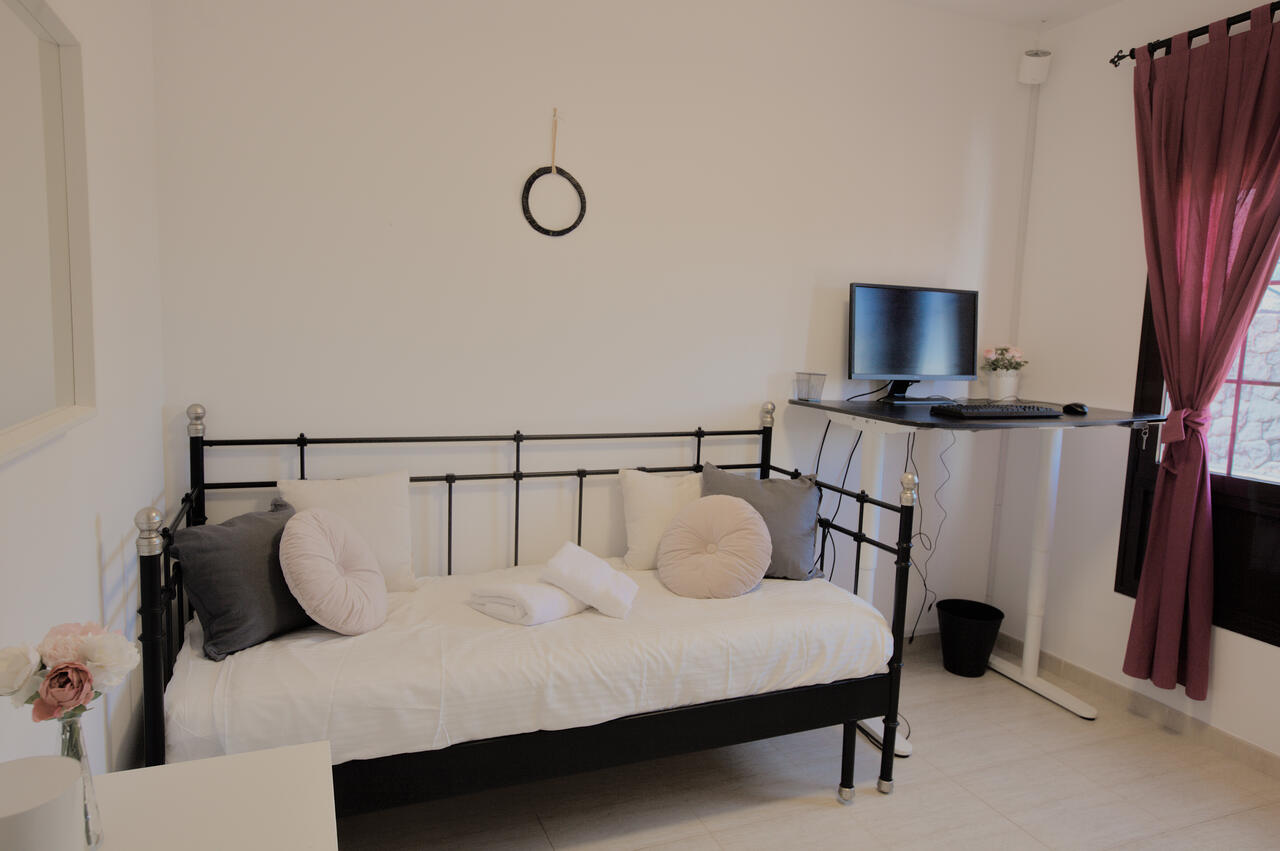
For most of our guests, the honest answer is: the home office setup at the villa is better than any of these, so they use it. The sit-stand desk, the Ethernet drop, and a second monitor if you bring your own, cover 95% of remote work needs.
What Does Daily Life Look Like?
The rhythm most nomads settle into in Costa Teguise looks something like this.
Morning: coffee on the terrace, emails, a swim or a beach walk before the day gets busy. Playa El Ancla is 10 minutes from the villa and rarely has anyone on it before 10 am.
Work block: deep work from 9 or 10 am, through European morning meetings, until lunch. The time zone offset means you often finish a full “European morning” by 12 or 1 pm local, which leaves the afternoon genuinely open.
Lunch break: quick walk to the supermarket or a menu del día (a fixed-price lunch) at one of the local restaurants for around 12-15 euros including a drink.
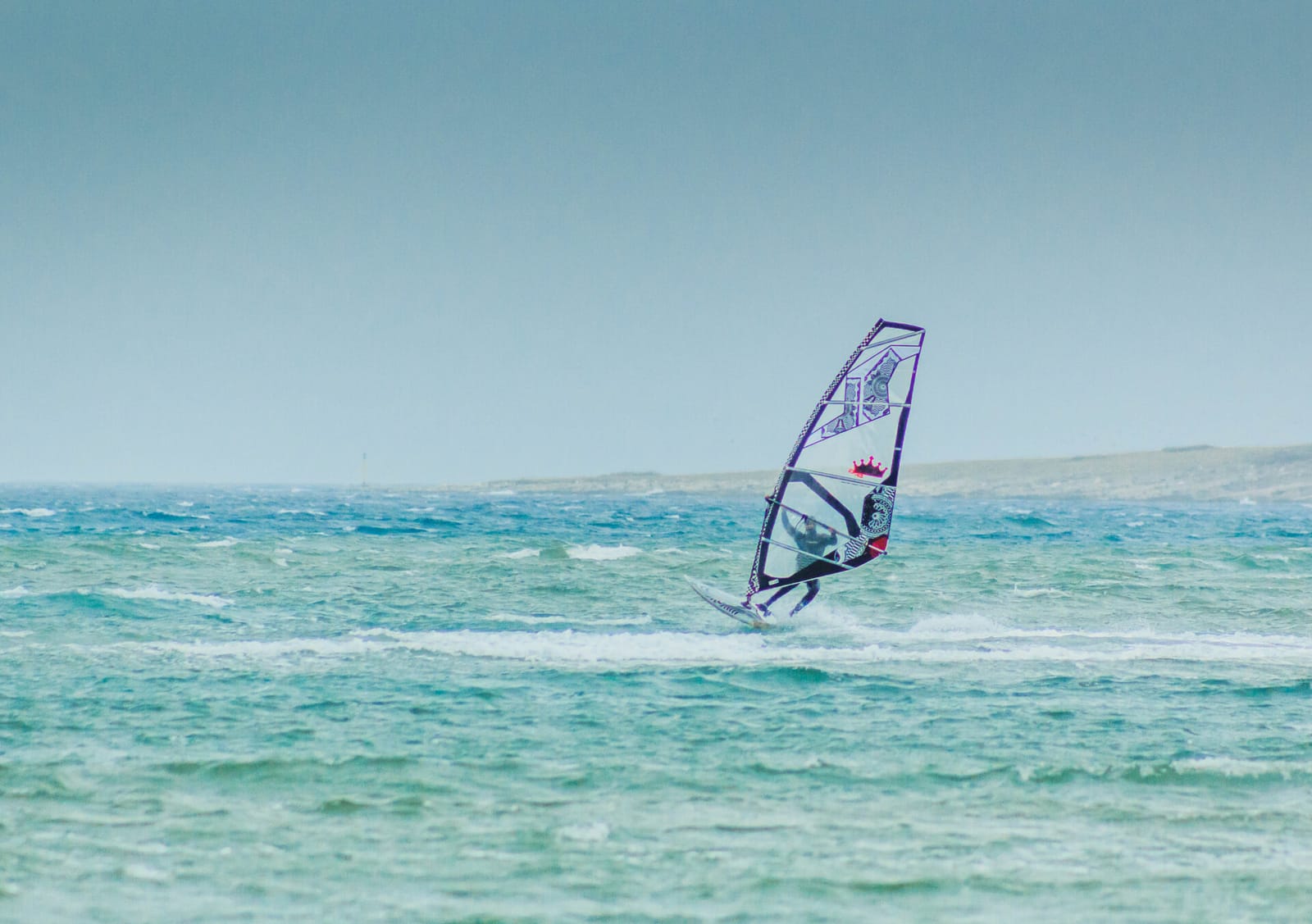
Afternoon: second work block or, if you started early, a swim, a bike ride, or a hike. The wind picks up in the afternoon in Costa Teguise (this is why it is famous for windsurfing and kitesurfing), so if you wanted to try water sports this is when you would do it.
Evening: the promenade along Pueblo Marinero fills up for the sunset. Dinner options range from cheap tapas to a handful of nicer seafood places. It is relaxed, not rowdy.
Is Lanzarote Good for Long Stays and the Spanish Digital Nomad Visa?
Spain launched its Digital Nomad Visa in January 2023 under the Startup Act. It applies to the whole country including the Canary Islands, so yes, Lanzarote counts.
Quick overview of requirements as of 2026 (always verify with a Spanish immigration lawyer before applying):
- Income: around €2,849 gross per month for a single applicant as of January 2026 (roughly 225% of Spain’s minimum salary, which rose for 2026). More for dependents.
- Employment: you must work remotely for a company outside Spain, or be a freelancer with most of your income from non-Spanish clients (max 20% can come from Spain).
- Experience: 3+ years of relevant work experience, OR a university degree from a recognized institution.
- Duration: 1 year initial visa from a Spanish consulate abroad, renewable to a 3 year residence permit once in Spain.
- Tax: employees arriving under the DNV can opt into the Beckham Law flat 24% income tax on up to €600k of Spanish-source income for up to 6 years, instead of the normal progressive scale. Freelancers and most self-employed applicants are typically excluded from Beckham, so speak to a Spanish tax lawyer before you plan around it.
The Canary Islands also have their own regional tax advantages: IGIC (local VAT) is 7% instead of the 21% IVA on the mainland, which lowers the cost of almost everything you buy. This applies to everyone, visa or not.
For shorter trips, UK, US, Canadian, and most non-EU citizens can stay for up to 90 days in any 180 day period under the Schengen rules. A lot of nomads do repeated 1-2 month stays without ever applying for the visa.
What Can You Do After Work and on Weekends?
This is where Lanzarote really separates itself from generic “remote work on a beach” destinations. The island is small enough that you can genuinely explore it on weekends without spending a full day in transit.
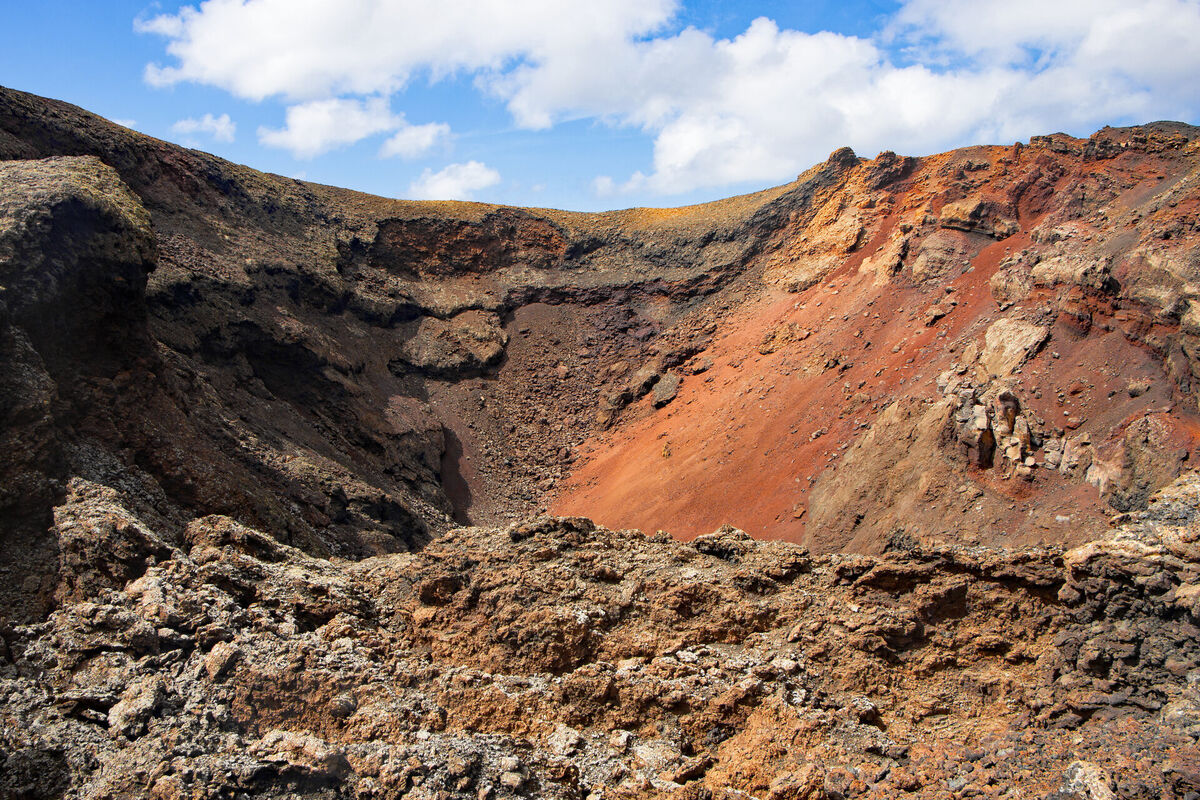
- Timanfaya National Park is a 30 minute drive. The volcanic landscape looks like Mars and you will not find anything similar in Europe.
- Mountain biking and cycling routes are everywhere. The island is a known pro-cycling training destination and most routes start within 20 minutes of Costa Teguise.
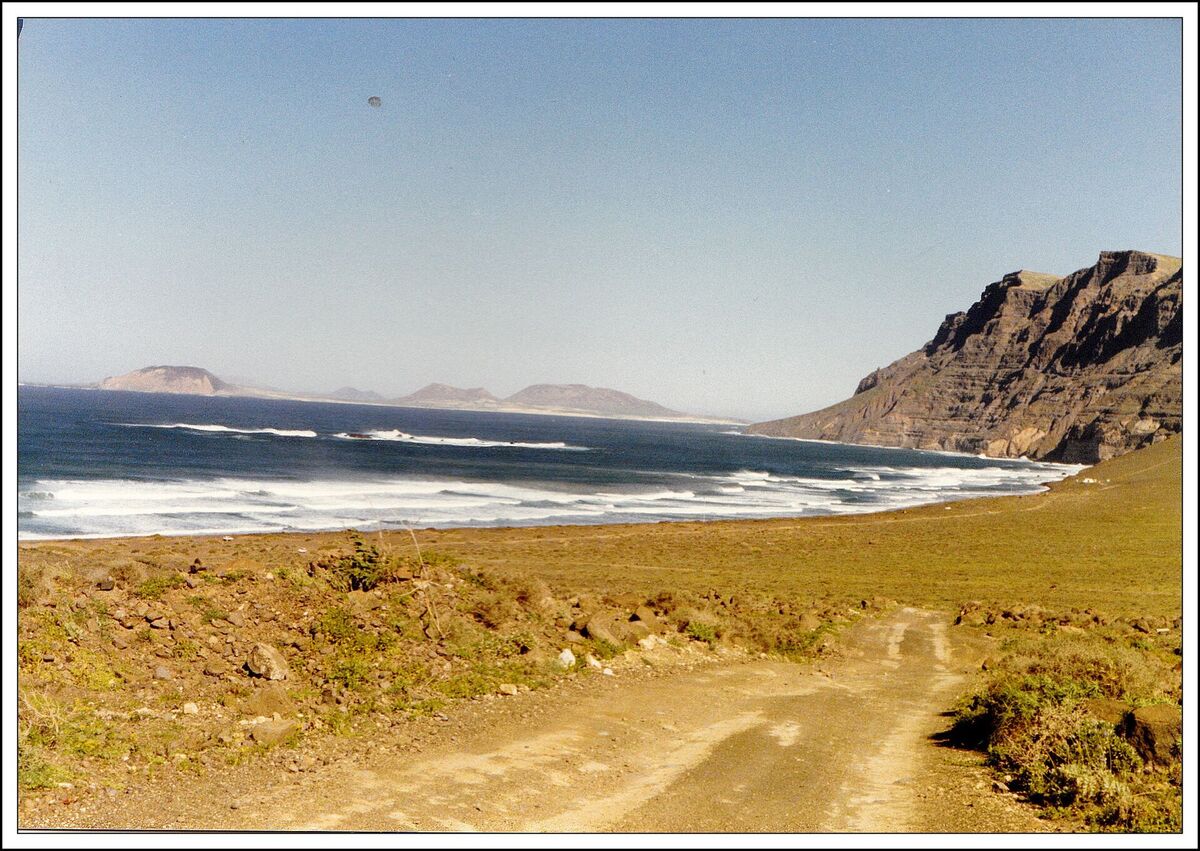
- Famara beach (20 min drive) is the main surf and kitesurf spot. Long Atlantic swells, massive sandy beach, La Graciosa island on the horizon.
- La Geria (20 min drive) is the wine region. Volcanic vineyards, dozens of bodegas, tasting menus from €10.
- Sunday market in Teguise town (10 min drive, 9:00 to 14:00) is the biggest market in the Canary Islands, good for local produce, crafts, and a morning out.
Plus: running events, triathlons, trail races, open water swim meets, and training camps happen every month. The island is on the international sports calendar for good reason.
Is Costa Teguise the Right Base for You?
Costa Teguise is a strong fit if you want a quiet, practical base where remote work just works, you can step outside your door and be at a beach in 10 minutes, and you want consistent weather without the crowds of the bigger Mediterranean hubs.
It is less of a fit if you want nonstop nightlife, a large in-person coworking community, or the buzzy expat scene of Las Palmas (on Gran Canaria). Costa Teguise is calmer than that, on purpose.
If the calm and the logistics sound right, Casa Los Alisios is set up specifically for longer working stays: 1 Gbps mesh Wi-Fi, wired Ethernet, a motorized sit-stand desk, a full kitchen, a quiet single-level layout with no stairs, a communal pool in the complex, and 3 minutes on foot to the supermarket. Most of our long-stay guests are remote workers, and we designed the villa around what they actually need, not around what looks good in a listing photo.
Frequently Asked Questions
- Is Lanzarote good for digital nomads?
- Yes. Lanzarote stays mild (19 to 28°C in every month), with widely available fiber internet, Spain's Digital Nomad Visa, and a 1 hour offset from mainland Europe that keeps business hours workable. Costa Teguise specifically has short distances to beaches, supermarkets, and the airport.
- What time zone does Lanzarote use for remote work?
- Lanzarote uses Western European Time (WET, UTC+0 in winter and UTC+1 in summer), the same zone as the UK, Ireland, and Portugal. That is 1 hour behind mainland Spain and most of continental Europe, which is easy to work around for remote teams.
- Is there a coworking space in Costa Teguise?
- Not in Costa Teguise itself. The closest dedicated coworking spaces are Coworking Guru in Teguise town (10 min drive), The Square Coworking in Arrecife (20 min drive), and Co-working Lanzarote in Puerto del Carmen (20 min drive). Many cafes and bars in Costa Teguise accept laptop workers.
- How fast is the internet on Lanzarote?
- Fiber internet is widely available across Costa Teguise, with home connections of 300 Mbps to 1 Gbps common. Mobile 4G and 5G coverage is strong in the main towns. Casa Los Alisios has 1 Gbps mesh Wi-Fi plus wired Ethernet in the home office.
- Can I get the Spanish Digital Nomad Visa while staying in Lanzarote?
- Yes. Spain's Digital Nomad Visa applies to the whole country, including the Canary Islands. As of January 2026 you need to show a gross monthly income of around €2,849 (roughly 225% of Spain's minimum salary), 3+ years of relevant experience or a university degree, and proof of remote work for a non-Spanish company.
Planning your trip? Book Casa Los Alisios